- Sweden: 84% of the competitive gambling market was licensed in 2025 (online casino 81%, betting 96%), per Spelinspektionen.
- Netherlands: 91% to 95% of online players used licensed sites in the second half of 2025, but only 53% of gross gaming revenue went to them, per the Kansspelautoriteit.
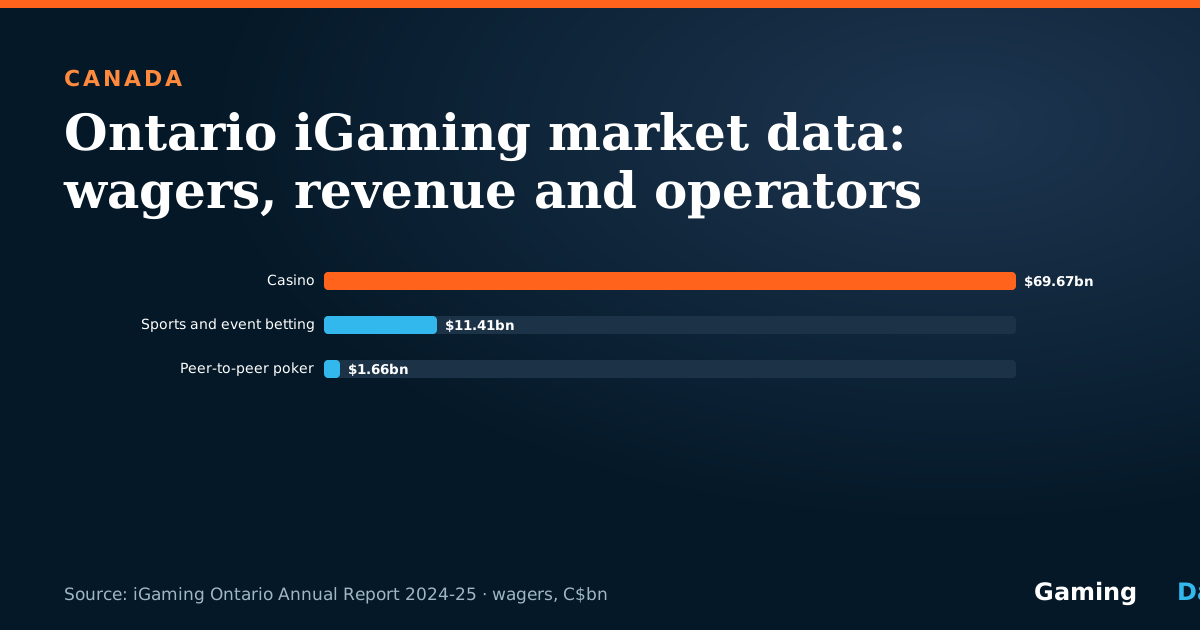
- Ontario: over 90% of iGaming players chose the regulated market after four years, per an Ipsos study for iGaming Ontario.
- Germany about 77% (2025) and Denmark 90% (2020 to 2022) are reported by trade press citing the regulators.
Channelisation rates published for regulated online gambling markets range from about 53% to over 90%, depending on the market and, just as much, on what is being counted. Sweden reports 84% for 2025. The Netherlands reports more than 90% of players but 53% of money spent. Ontario reports over 90% of players. These are all estimates, because unlicensed activity is not reported to anyone, and the method decides the answer.
Published estimates
| Market | Rate | Period | What is counted, and how | Source |
|---|---|---|---|---|
| Sweden | 84% (casino 81%, betting 96%) | 2025 | Average of a player survey (89%) and web-traffic estimates (78%) | Spelinspektionen, 15 June 2026 |
| Sweden | 85% | 2024 | Earlier method; the regulator says 2025 is not fully comparable | Spelinspektionen annual report |
| Netherlands, players | 91% or 95% | H2 2025 | Panel survey; the range depends on how people using both legal and illegal sites are counted | Kansspelautoriteit, 17 April 2026 |
| Netherlands, revenue | 53% (H1 2025: 56%) | H2 2025 | Unlicensed revenue modelled from search advertising volumes | Kansspelautoriteit, 17 April 2026 |
| Ontario, players | over 90% | Year 4 (2025-26) | Player survey by Ipsos | iGaming Ontario, 21 May 2026 |
| Germany | about 77% | 2025 | Not specified in the source found | GGL report via trade press |
| Denmark | 90% | 2020 to 2022 | Not specified; 69% in 2012. The 2025 update was deferred | Spillemyndigheden via trade press |
Players versus money
The Dutch figures show why the measure matters. Almost all players use licensed sites, yet roughly half the money goes elsewhere. The likely explanation is that a smaller group of high-spending players uses unlicensed sites, and a revenue measure weights them by spend while a player survey counts each person once. When a regulator quotes only the player figure, it can look more successful than the revenue figure would suggest. Sweden blends a survey with web traffic, which sits somewhere between the two.
What moves the rate
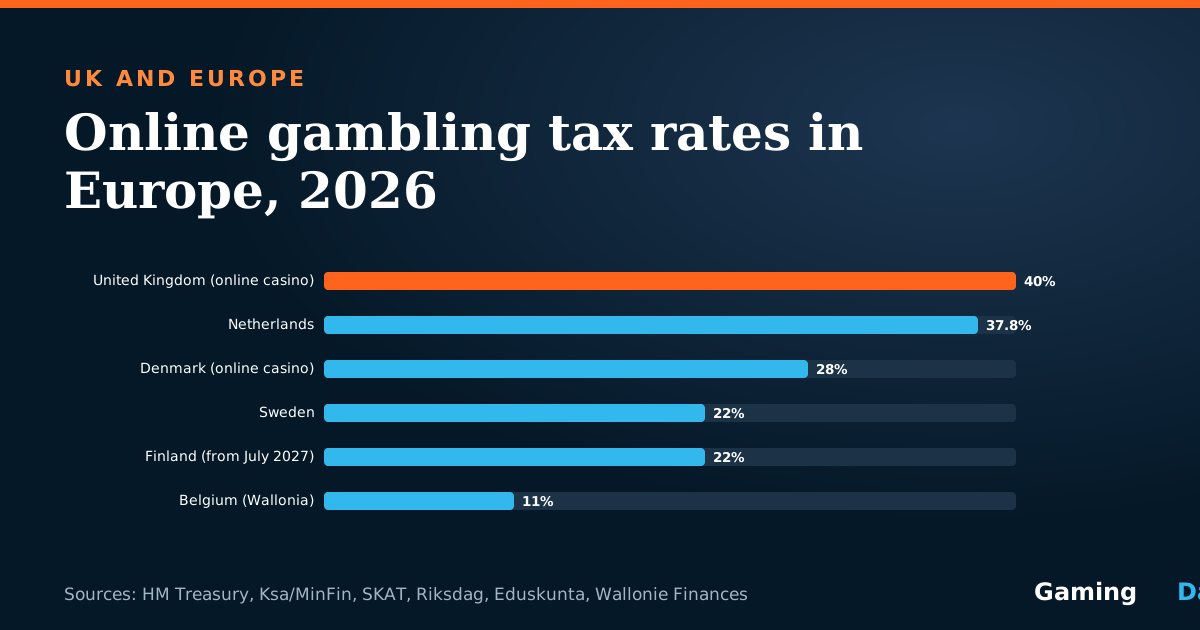
Regulators and operators usually point to three factors: the tax rate, which affects the odds and bonuses licensed sites can offer; product restrictions, such as stake limits or bans on certain games; and enforcement against unlicensed sites, through blocking and payment controls. The relationship is not simple to measure. In the Netherlands, the drop in the revenue share in 2025 came alongside a tax increase to 34.2%, as our European tax table records, but deposit limits and advertising rules changed in the same years.
Using these numbers responsibly
Quote each figure with its market, year and method, and do not rank markets against each other on these numbers alone. A web-traffic model can miss mobile apps; a survey can be affected by people who do not know whether a site is licensed; a search-advertising model depends on assumptions about spend per visit. For trend analysis, compare a market with its own earlier figures produced by the same method, and check whether the method changed: Spelinspektionen notes that its 2025 estimate of 84% is not fully comparable with the 85% for 2024 because its method is still being developed.
Questions about channelisation
What is a channelisation rate in gambling?
It is the share of gambling activity that takes place with licensed operators, measured either by number of players or by money spent. A rate of 84% means an estimated 16% of activity is with unlicensed operators.
Which market has the highest channelisation?
On published figures, several report around 90% of players (the Netherlands, Ontario, Denmark in 2020 to 2022). On a revenue basis, the Netherlands reports only 53%. Different methods mean there is no fair single ranking.
Sources
- Spelinspektionen: Kanaliseringsgrad på den svenska spelmarknaden 2025 (15 June 2026)
- Spelinspektionen: Årsredovisning 2025
- Kansspelautoriteit: Monitoringsrapportage online kansspelen voorjaar 2026 (17 April 2026)
- iGaming Ontario: Ipsos channelization study, year 4 (21 May 2026)
- SiGMA: GGL annual report figures (7 July 2026; secondary)
- iGB: Denmark reaches 90% channelisation (28 September 2022; secondary); iGB on the deferred 2025 report (30 June 2026)